
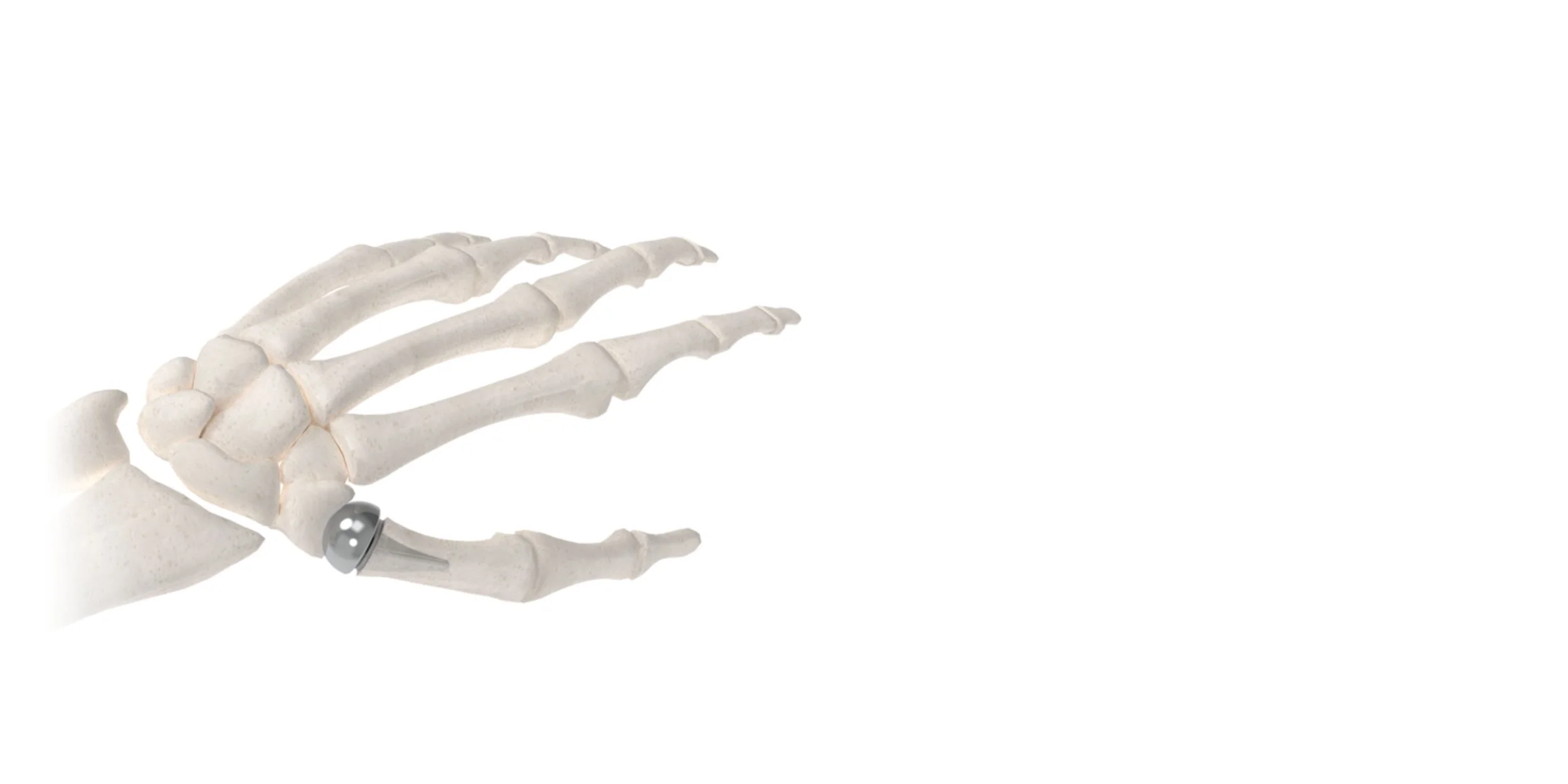
Advanced Thumb Joint Replacement for Arthritis
Thumb arthritis can make simple everyday activities painful. Opening jars, turning keys, writing, or gripping objects may become difficult as the cartilage at the base of the thumb wears away.
Dr. Zhang offers the BioPro Modular Thumb Implant, an advanced joint replacement designed to relieve pain while preserving the natural function and strength of the thumb.
Unlike traditional procedures that remove part of the joint, this technique replaces the damaged joint with a precision implant, allowing many patients to maintain grip strength, thumb length, and mobility.
BioPro Modular Thumb Implant

What Is Thumb Arthritis?
The thumb carpometacarpal (CMC) joint is one of the most common sites for arthritis in the hand. As cartilage deteriorates, the bones begin to rub against each other, leading to pain, weakness, and reduced motion.
-
Pain at the base of the thumb
Difficulty gripping or pinching objects
Swelling and tenderness near the joint
Decreased strength
Limited motion
Aching pain after use or at night
Thumb arthritis affects millions of people and is particularly common in adults over 40.
-
Traditional surgical treatment often involves removing the trapezium bone at the base of the thumb (a procedure called trapeziectomy or LRTI). While effective for pain relief, this approach can sometimes lead to:
Reduced grip or pinch strength
Shortening of the thumb
Longer recovery times
The BioPro Modular Thumb Implant offers a different approach.
Instead of removing the joint, the implant replaces it, allowing the thumb to maintain its natural structure and mechanics.
-
The BioPro system is a two-piece modular implant designed to restore movement and reduce pain in the thumb joint.
Key features include:
Joint replacement rather than bone removal
Modular sizing for a personalized fit
Preservation of thumb length and natural appearance
Improved grip and pinch strength
Potential for faster recovery
Future revision options if needed
The system offers multiple implant combinations, allowing surgeons to match the implant to a patient’s anatomy for optimal alignment and function.
-
You may be a candidate for the BioPro thumb implant if you:
Have moderate to severe thumb arthritis
Continue to experience pain despite splints, therapy, or injections
Want to maintain thumb strength and motion
Are seeking an alternative to trapeziectomy surgery
Dr. Zhang will evaluate your condition using imaging and a clinical examination to determine whether this procedure is the best option for your situation.
-
BioPro thumb joint replacement is typically an outpatient procedure, meaning patients go home the same day.
Typical recovery timeline:
Weeks 1–4
Thumb immobilized in a cast or splint
Weeks 4–8
Hand therapy begins to restore motion and strength
8–12 weeks
Most patients return to unrestricted activities
Recovery varies depending on individual healing and therapy progress.
-
Studies examining patients who received the BioPro thumb implant have shown promising results.
Research has demonstrated:
Significant reduction in pain scores after surgery
Improved hand function and strength
High patient satisfaction
In one clinical study, 10 out of 11 patients reported meaningful pain relief and functional improvement after surgery.
Patient Stories
“I can use my hand again.”
"Before surgery, opening a jar or turning a key was extremely painful. After the implant and therapy, I’ve regained mobility and can do everyday tasks without constant pain."
“I was back to my normal routine.”
"The recovery was much faster than I expected. Within a few months, I was back to gardening and cooking without the pain that had been limiting me for years."
“Strength is coming back.”
"The biggest difference for me is grip strength. I can hold objects confidently again, and the constant ache in my thumb is gone."

Why Patients Choose Dr. Zhang
Dr. Zhang specializes in advanced hand and upper extremity procedures and is committed to helping patients regain pain-free function.
His approach emphasizes:
Personalized surgical planning
Modern joint replacement techniques
Comprehensive recovery and rehabilitation guidance
Clear communication about treatment options